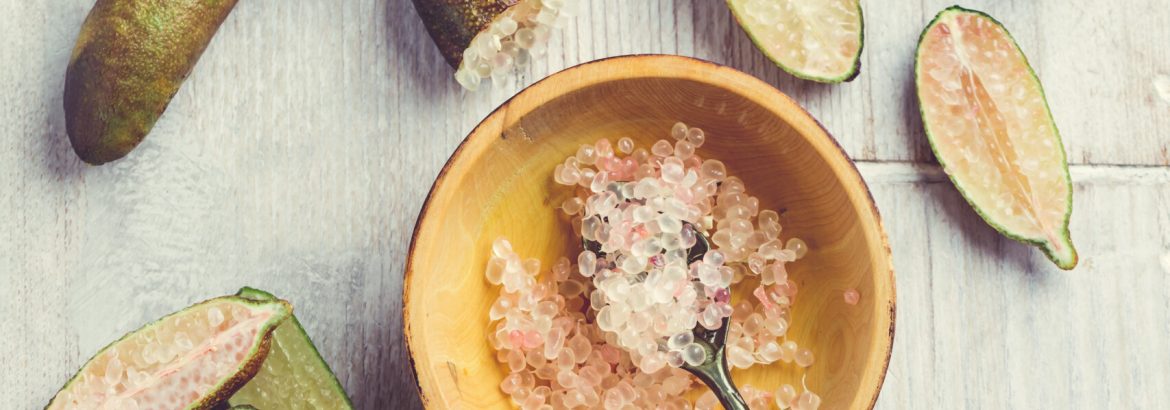
Produce caviars, finger lime pulp, fruity boba, edible pearls…these ingredients and techniques lend color, texture, and whimsy to dishes across the menu. Easy to make or add, these pops of flavor can be the difference between good and great.
- Molecular gastronomy introduced edible fruit spheres that are most often made with flavors like strawberry, mango, passion fruit, and watermelon—but the sky is the limit with this technique.
- Adding fiery sauce can be cleverly done with hot chile-filled pearls that lend heat to tacos, tostadas, pico de gallo, and ceviches.
- Give protein dishes and salads vegetal notes with fresh herb “caviar” made with cilantro, basil, chervil, or parsley.
Some chefs prefer to skip the spherification process and use natural finger lime pulp to add bright citrus flavor in green, pink, or yellow hues. - Boba or tapioca pearls continue to trend in both beverages and desserts. These chewy orbs can be made in myriad flavors.
These pops of flavor add unique textures, colors, and flavor notes to drinks, desserts, and more.